All-on-4 Dental Implant Surgery:
A Comprehensive Review of Technique, Indications, Biomechanics, and Long-Term Outcomes
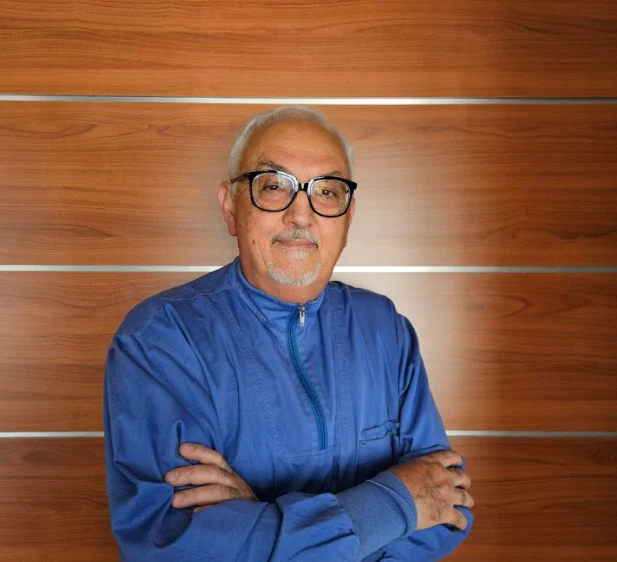
- Author: Dr. Enrico Olivieri
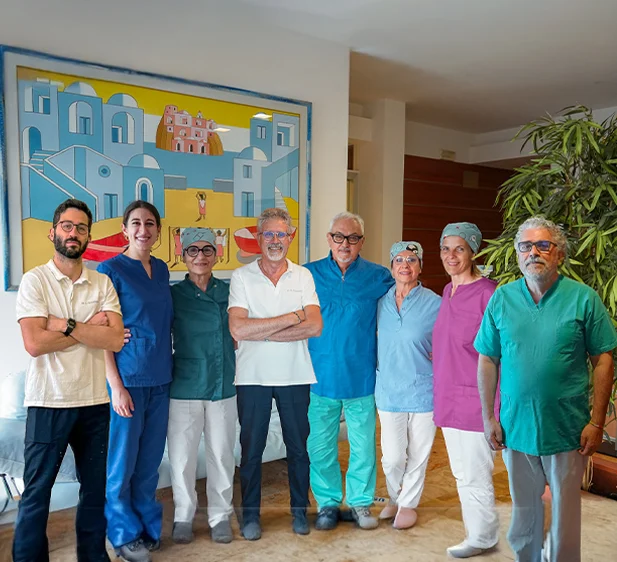
- Clinic: Tre.M
- Email: enrico.olivieri@treemme.it
Abstract
The All-on-4® treatment concept represents a paradigm shift in full-arch implant rehabilitation. Developed to address the anatomical and financial limitations of traditional implant protocols, it enables fixed prosthetic restoration using only four implants strategically placed to maximize support while avoiding complex grafting procedures. This article provides an in-depth review of the surgical technique, prosthetic considerations, patient selection criteria, biomechanical rationale, common complications, and long-term clinical outcomes, supported by a review of the current literature.
1. Introduction
Edentulism, particularly in aging populations, remains a global health burden. It impairs mastication, phonetics, aesthetics, and overall quality of life. Traditional full dentures often fail to provide the stability required for functional satisfaction, especially in cases of severe mandibular ridge resorption.
The All-on-4® treatment concept, pioneered by Dr. Paulo Malo in the late 1990s in collaboration with Nobel Biocare, offers a fixed, full-arch solution on the same day of surgery by utilizing immediate loading of four implants. It is a graftless solution that provides high levels of satisfaction and oral function recovery in both edentulous and terminal dentition patients.
2. Biomechanical Rationale
The All-on-4 concept is based on biomechanical principles that maximize load distribution and implant anchorage while minimizing cantilever effects:
- Anterior-posterior (A-P) spread is optimized by tilting posterior implants distally at 30° to 45°, which increases the effective inter-implant distance.
- Axial loading of anterior implants, placed in the canine/lateral incisor region, stabilizes the anterior arch.
- Angled posterior implants engage cortical bone in the nasal floor or anterior sinus wall, increasing primary stability.
3. Indications and Patient Selection
3.1. Indications
- – Fully edentulous maxilla or mandible
- – Terminal dentition with failing teeth due to periodontitis, decay, or trauma
- – Moderate to severe bone resorption
- – Desire for fixed prosthetic restoration with minimal surgical intervention
- – Patients with inadequate bone volume for conventional implants without grafting
3.2. Contraindications
- Uncontrolled systemic diseases (e.g., uncontrolled diabetes, cardiovascular instability)
- Active oral infections or untreated periodontal disease
- Heavy smoking (>10 cigarettes/day)
- Poor oral hygiene and lack of compliance
- Severe bruxism or parafunctional habits without proper occlusal planning
4. Surgical Protocol
4.1. Preoperative Evaluation
- Clinical examination to assess soft tissue health, interarch space, smile line, and occlusion.
- Radiographic imaging with CBCT to evaluate bone volume, density, and anatomical landmarks.
- Digital planning using software (e.g., NobelClinician, BlueSkyPlan) to simulate implant positioning and create surgical guides if desired.
4.2. Implant Placement
- Local anaesthesia or IV sedation/general anaesthesia depending on complexity.
- Full-thickness flap reflection and extraction of remaining teeth.
- Alveoloplasty to create a flat bone platform if necessary.
Placement of:
- Two anterior implants vertically in the lateral incisor/canine region.
- Two posterior implants tilted distally up to 45° to engage dense cortical bone.
- Implants typically range from 3.75–5.0 mm in diameter and 10–18 mm in length.
- Insertion torque should be ≥35–45 Ncm to allow for immediate loading.
4.3. Immediate Prosthetic Phase
- Multi-unit abutments are placed (17° or 30° angled) to correct implant angulation and facilitate prosthetic access.
- An acrylic resin provisional prosthesis is fabricated chairside or pre-fabricated and retrofitted.
- The prosthesis is screwed into place within 24 hours.
5. Prosthetic Considerations
Immediate prosthesis typically acrylic over a titanium framework.
Final prosthesis (after 3–6 months) may be metal-acrylic, monolithic zirconia, or PEEK with composite layering.
Occlusal scheme: Balanced or canine guidance, depending on arch form and opposing dentition.
Passive fit of the framework is critical to avoid mechanical overload.
Final prosthesis (after 3–6 months) may be metal-acrylic, monolithic zirconia, or PEEK with composite layering.
Occlusal scheme: Balanced or canine guidance, depending on arch form and opposing dentition.
Passive fit of the framework is critical to avoid mechanical overload.
6. Complications and Risk Management
6.1. Surgical Complications
- Implant malposition
- Nerve injury (particularly in the mandible)
- Sinus perforation
- Hemorrhage from nutrient canals
6.2. Prosthetic Complications
- Screw loosening or fracture
- Prosthetic tooth fracture
- Framework misfit
- Occlusal overload
6.3. Biological Complications
- Peri-implant mucositis and peri-implantitis
- Implant failure due to lack of osseointegration or overload
- Preventive strategies include:
- Meticulous surgical technique
- Passive-fitting frameworks
- Regular maintenance visits
- Patient education on hygiene
7. Long-Term Outcomes and Evidence
- Multiple studies have demonstrated cumulative implant survival rates of 95–98% over 5 to 10 years.
- Prosthetic survival rates also exceed 94% in most long-term analyses.
- Success is influenced by implant surface technology (e.g., TiUnite), immediate load protocol adherence, and patient compliance.
- Notable Studies:
- Malo et al. (2011): 10-year follow-up of 245 patients, implant survival of 94.8%.
- Agliardi et al. (2008): 3-year follow-up, minimal bone loss (<1 mm), 100% prosthesis survival.
8. Conclusion
- The All-on-4 technique has revolutionized full-arch rehabilitation, offering a minimally invasive, graftless solution for edentulous and terminal dentition patients. Its success lies in meticulous planning, surgical precision, and patient-specific prosthetic design. With high survival rates and significant functional and psychosocial benefits, All-on-4 remains a gold standard for fixed full-arch implant rehabilitation.
References
Malo P, Rangert B, Nobre M. "All-on-4 Immediate-Function Concept With Brånemark System Implants for Completely Edentulous Mandibles." Clin Implant Dent Relat Res. 2003.
Agliardi E, et al. "Rehabilitation of Edentulous Jaws With Immediate-Function All-on-4 Implants: A 3-Year Prospective Study." Eur J Oral Implantol. 2008.
Gallucci GO, et al. "Consensus Statements and Clinical Recommendations for Implant Loading Protocols." Int J Oral Maxillofac Implants. 2014.
Agliardi E, et al. "Rehabilitation of Edentulous Jaws With Immediate-Function All-on-4 Implants: A 3-Year Prospective Study." Eur J Oral Implantol. 2008.
Gallucci GO, et al. "Consensus Statements and Clinical Recommendations for Implant Loading Protocols." Int J Oral Maxillofac Implants. 2014.