
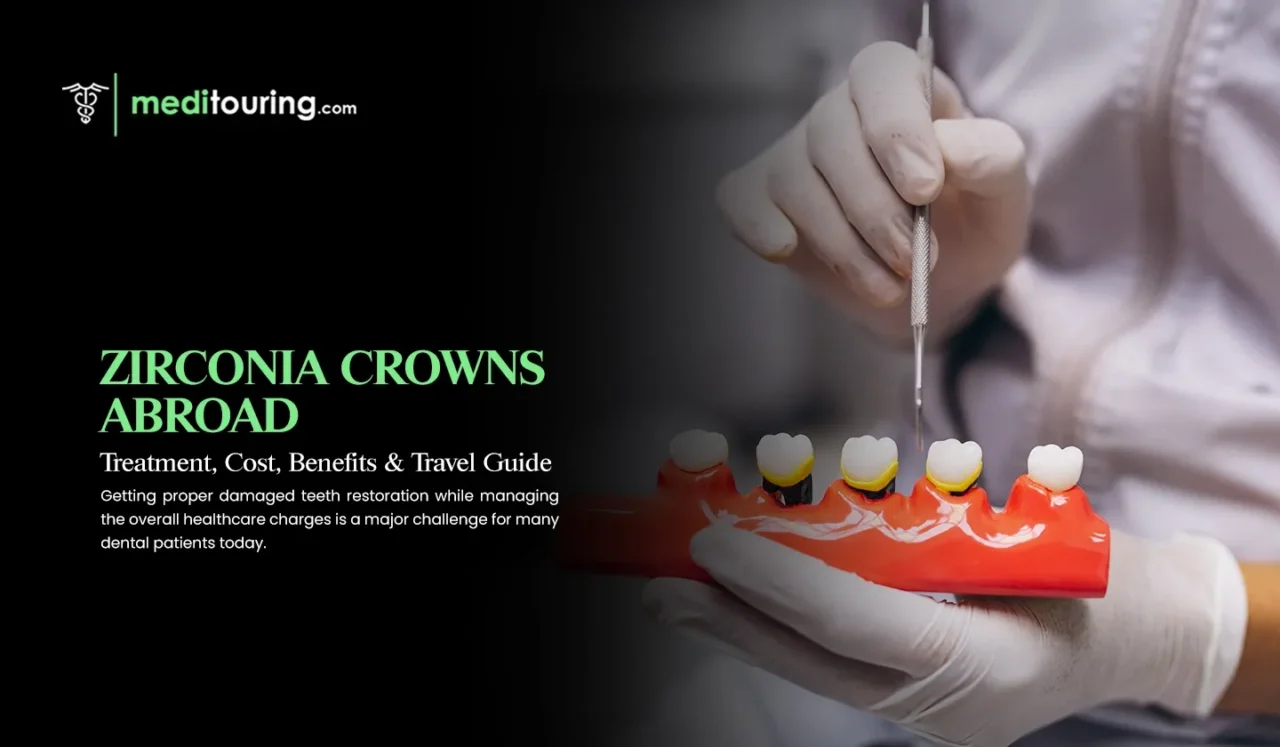
Getting proper damaged teeth restoration while managing the overall healthcare charges is a major challenge for many dental patients today. Private clinics at home can charge significantly more than international dental crown solutions, often several times the cost. And if you are facing the same dilemma of getting a healthy and functional smile but on a budget, then you need to look at various dental restoration programs abroad. By getting a complete dental restoration or zirconia crowns abroad, you can get an advanced procedure at a fraction of the cost for a lifelike aesthetic. In this blog, we will break down the total cost of the procedure before you plan your entire dental trip.
Understanding Zirconia Crowns
A zirconia crown comes under advanced dental restoration made from zirconium dioxide, a highly durable and biocompatible ceramic. In comparison to traditional restoration methods that use a dark metal base, zirconia is completely metal-free. With the help of these advanced crowns, you can get an actual white shade because of their light transmission properties and excellent transparency that naturally replicates your tooth enamel. Many doctors recommend zirconia crowns based on individual patient needs, and with proper care, they can last 15–20+ years. They are divided into two basic categories—
- Monolithic zirconia crowns—these crowns are made up of a single solid block of ceramic material and lessen the risk of structural chipping. This type of zirconia crown is the most popular choice because of its durability for posterior teeth, as they need massive chewing force.
- Layered/veneered zirconia crowns—the second type has a solid zirconia core topped with a thin layer of aesthetic porcelain for enhanced translucency. These crowns are prized for premium shade-matching and edge translucency, making them best suited for highly visible front teeth.
Core Structural Advantages
Zirconia dental crowns abroad are gaining popularity because of their various clinical advantages for patients. Some of them include—
- Exceptional mechanical strength — These crowns can be up to three times stronger than standard porcelain crowns. Clinical research confirms that zirconia crowns provide the highest structural integrity, which can easily withstand clenching and chewing pressure without any damage.
- Bio compatibility and tissue health — These crowns are smooth and made with hypoallergenic ceramic material that easily fits with oral tissues and doesn’t cause gum discoloration or allergic reactions as compared to metal ones. There is no dark line at the gum margin, which is common in porcelain-fused-to-metal caps (PFM).
- Conservative tooth preparation — Because zirconia is strong even in thin sections, dentists can preserve more of the natural tooth structure during shaping.
Clinical Indicators: When to Get a Zirconia Crown?
Zirconia crowns come under advanced medical care, and patients dealing with complex dental damages, structural issues, or functional problems are generally recommended. If you’re wondering who needs zirconia crowns, the following dental issues are commonly treated with this procedure.
- Structural failures—People are recommended zirconia crowns for damaged teeth if the decayed ones are on the cusp of fracture or have severe cracking that cannot be rectified using conventional filling. A full crown will help in rebuilding the shape of the natural teeth and prevent further damage.
- Individuals suffering from bruxism—if you constantly clench or grind your teeth at night due to stress or other reasons, then these are recommended. Zirconia crowns are made up of high-quality material, which prevents heavy friction and long-term damage.
- Post endodontic therapy—if there is nerve damage, your teeth become brittle, and internal nerve tissues have to be removed completely. In such cases, after treatment, the area is sealed to prevent bacterial infection and to restore structural integrity.
Zirconia vs. Other Crowns
Zirconia crowns are advanced dental procedures. That’s why you need to carefully analyze your aesthetic desires against long-term functionality constraints before getting one. In this table, we will compare its properties and why they are better in comparison to standard options.
| Crown Material Type | Average Longevity | Structural Performance | Primary Clinical Target |
|---|---|---|---|
| Monolithic Zirconia | 15 to 20+ Years | High fracture resistance; lower glass-like translucency. | Back molars and patients with severe teeth grinding (bruxism). |
| Lithium Disilicate (Emax) | 10 to 14 Years | Exceptional light permeability; lower structural density than solid zirconia blocks. | Highly visible front teeth where cosmetic blending is critical. |
| Porcelain Fused to Metal (PFM) | 10 to 15 Years | Durable metal core; risk of a visible grey line near the gum line over time. | Cost-effective restorations for teeth subjected to strong bite forces. |
So, when you are choosing between zirconia crowns vs. porcelain crowns, or someone asks between zirconia vs. Emax crowns, then the answer will depend on the teeth damage, position, and materials.
Zirconia Crown Treatment Abroad
If you are thinking of getting zirconia crown treatment abroad, you need to understand that the process might take time depending on the clinical procedures. You need to follow these steps to get a high-precision zirconia crown procedure.
- Clinical assessment — The dentist will carefully analyze and do diagnostic screening and initial intraoral digital scans along with virtual assessment to determine whether you need zirconia crowns or not.
- Conservative shaping — Then, shaving will be done to damaged or decayed enamel performed under local anesthesia to fit the cap.
- High-precision impressions — Then, digital 3D templates and physical molds will be created in labs.
- Temporary restoration — Dentists add an interim cap to prevent any damage to the tooth framework and to maintain aesthetics till you get the permanent crown.
- Lab CAD/CAM milling — Using the advanced processing designs, it will be prepared and milled from a solid ceramic block.
- Fitting and final cementation — Lastly, you will get a trial and bite alignment analysis to fit the new crown permanently.
Cost and Value Analysis
Getting a dental crown abroad can make a huge difference to your budget, especially in countries like the USA or UK. Private clinics might charge £600 to around £1200 per tooth for getting a premium monolithic work. On the contrary, you can find many clinics that offer lower zirconia crown costs abroad, usually around £220 to £320 per unit. This happens because of several factors, including lower dentist fees, strong local competition, lower operational costs, and more competitive material sourcing. You can find a complete package that includes your accommodation, local transit, and overall treatment.
Conclusion
Hence, if you are looking to get a zirconia crown abroad, it can be a practical option. Meditouring offering affordable treatment without compromising quality. Choosing the right ceramic material helps you regain your chewing power and aesthetics as well. Make sure to work with a qualified dental professional and maintain a proper aftercare routine to ensure these crowns remain functional and durable for a longer time.
Frequently Asked Questions
Patients requiring durable zirconia crowns for damaged teeth, post-root canal protection, or structural support for dental implants.
Excellent biocompatibility, zero gum discoloration, minimal tooth shaving, and massive fracture resistance during a zirconia crown treatment abroad.
A zirconia crown vs. porcelain crown comparison shows zirconia lasts longer (15–20+ years). For zirconia vs. Emax crown, choose zirconia for back molars and Emax for front teeth.
If you’re getting zirconia crown treatment abroad, the process typically takes 5 to 7 days and includes diagnostic screening, tooth preparation, digital impressions, laboratory milling, and final cementation.
The average cost of zirconia crowns abroad is £220 to £320, significantly less than private clinic pricing at home. Protect your dental treatment investment with a strict zirconia crown aftercare routine.