What Are Crooked Teeth?
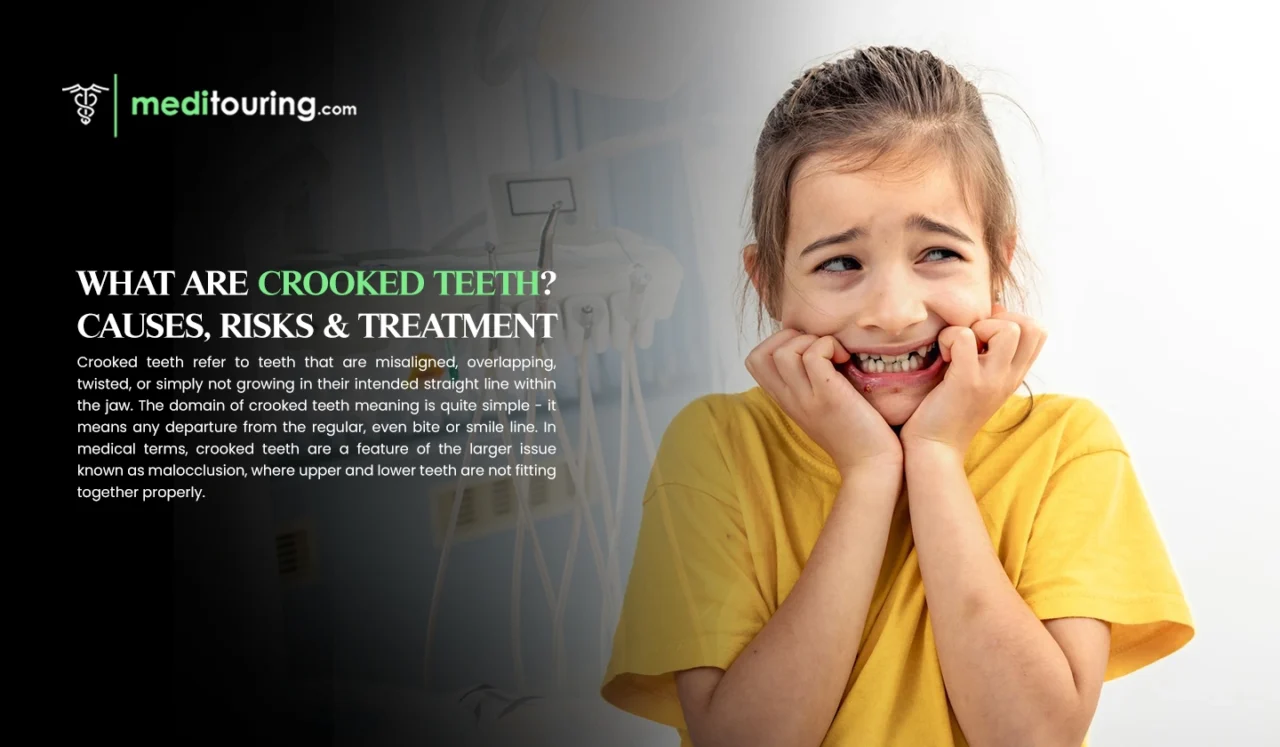
Crooked teeth refer to teeth that are misaligned, overlapping, twisted, or simply not growing in their intended straight line within the jaw. The domain of crooked teeth meaning is quite simple – it means any departure from the regular, even bite or smile line. In medical terms, crooked teeth are a feature of the larger issue known as malocclusion, where upper and lower teeth are not fitting together properly.
In fact, getting crooked teeth is a very normal thing. It is not only children who get affected but also teenagers and adults, and the expression of crooked teeth varies in many ways – from a single rotated tooth to a fully crowded set of teeth. Besides, crooked teeth do not always call for a visit to the orthodontist; a lot of people around are very content with a pocket-sized flaw in their smile. Only if the misalignment starts to lead to pain, trouble in chewing, or low self-esteem, then one should think about getting treatment.
Types of Crooked Teeth
Crooked teeth can appear in different areas of the mouth. Understanding the specific type helps dentists plan the right treatment approach.
1. Crooked Upper Teeth
The upper front or back teeth may rotate, overlap, or grow at an angle. This is one of the most visible forms and is often linked to jaw size or crowding issues.
2. Crooked Lower Teeth
Crooked lower teeth are particularly common, as the lower jaw has less space. The lower front teeth may crowd together, twist, or shift over time, even after previous orthodontic treatment.
3. Slightly Crooked Teeth
Slightly crooked teeth involve minor misalignment, often just one or two teeth.
4. Crooked Bottom Teeth
Crooked bottom teeth, particularly the lower incisors, are naturally prone to crowding as the jaw develops. Crooked teeth can arise from multiple factors including genetics and childhood habits.
Health Risks of Crooked Teeth
In fact, slightly crooked teeth, while they may look unappealing in the mirror, are not necessarily a reason for immediate health concern. Medium to very bad positioning, but can cause different dental and health issues:
Gum Disease & Tooth Decay: When teeth are not aligned properly, crevices are formed which are very difficult to clean and also lead to the building up of plaque.
Chewing & Digestion Problems: Teeth that are misaligned may result in impaired chewing. The jaw muscles will be under extra pressure which will eventually affect digestion.
Speech Difficulties: Extremely uneven teeth can influence the way sounds are formed so that people may start lisping or develop other speech disorders.
Self-esteem & Mental Health: A lot of people use crooked teeth as a reason to feel unhappy with their own look
Treatment Options for Crooked Teeth
The most suitable solution for crooked teeth depends on how badly teeth are out of alignment, your age, money, and what you personally like. Here are some options for you:
Metal Braces
Conventional metal braces consist of brackets, bands, and a flexible wire that slowly moves the teeth into the right position.
Clear Aligners (e.g. Invisalign)
They are transparent, plastic aligners, you hardly see them and that is why they are getting popular among grown-ups. Aligners are only capable of correcting mild and moderate crooked teeth conditions, including slightly crooked and bottom teeth.
Ceramic Braces
Ceramic braces have brackets that are tooth coloured or clear so they don’t stand out. Besides properly fixing the crooked lower teeth and misaligned upper teeth, they also act as a less conspicuous choice.
Lingual Braces
Lingual braces are fixed to the back side (the tongue-side) of teeth so you don’t see them at all. They are suitable even for very complicated cases but at first, they might pose some difficulties to get used to.
Retainers
Retainers are necessary after using braces or aligners if you want to keep your teeth in the position you worked so hard to get. Besides that, for very small adjustments to slightly crooked teeth, retainers can also be a standalone treatment option.
Dental Surgery
If you have a severely misaligned jaw, orthognathic surgery is the method of choice after which braces are used. It is really a last resort when it comes to other options being considered before it.
Explore Affordable Dental Treatment Abroad: Meditouring connects patients with world-class dental clinics overseas. Learn more:
- Dental Treatments Abroad
- Dental Implants Abroad
- All on 4 Dental Implants Abroad
When Should You See a Dentist?
You should consult a dentist if your crooked teeth are causing any of the following:
- Pain when chewing or biting
- Speech difficulties
- Difficulty cleaning your teeth properly
- Jaw soreness or frequent headaches
For adults with missing teeth alongside misalignment, options such as dental implants abroad or All on 4 dental implants abroad may also be discussed as part of a comprehensive restoration plan.
Frequently Asked Questions
In medical terms, crooked teeth constitute a symptom of malocclusion and abnormal alignment of the teeth and/or jaws. So, this term covers a range of tooth deviations such as overlapping, rotated, twisted, or differently angled. These abnormalities can be present in the upper teeth, lower teeth, or a combination of both.
It is in fact the case that crooked lower teeth are a very frequent thing. And it’s basically due to Really the lower jaw normally has less space, which makes crowding in the lower front teeth (lower incisors) a very frequent occurrence. Also, lower teeth are prone to movements even post orthodontic treatment and this is Mainly the case if a retainer is not used.
In fact. In some cases, a little crooked tooth can get worse if no measures are taken, In particular if there is the presence of gum disease, tooth grinding (bruxism), or tooth loss. It is highly recommended to have a dental visit regularly.
Of course, for mild to moderate levels of crookedness. Besides other types of braces, clear aligners are a major treatment preferred by adults who have bottom teeth problems and at the same time do not want to reveal their treatment. Only with very small adjustments, a retainer could be the solution too. Sometimes dental veneers act just like a cosmetic aid only and do not change the position of the teeth.